
M215HCA-L3B sourcing should establish whether the equipment supply can support the complete display assembly. The module includes its LED backlight but requires an external driver. A panel wattage alone leaves conversion losses, controller consumption, and startup demand unresolved. For an OEM retaining an existing power supply, these differences can determine whether the proposed assembly is practical.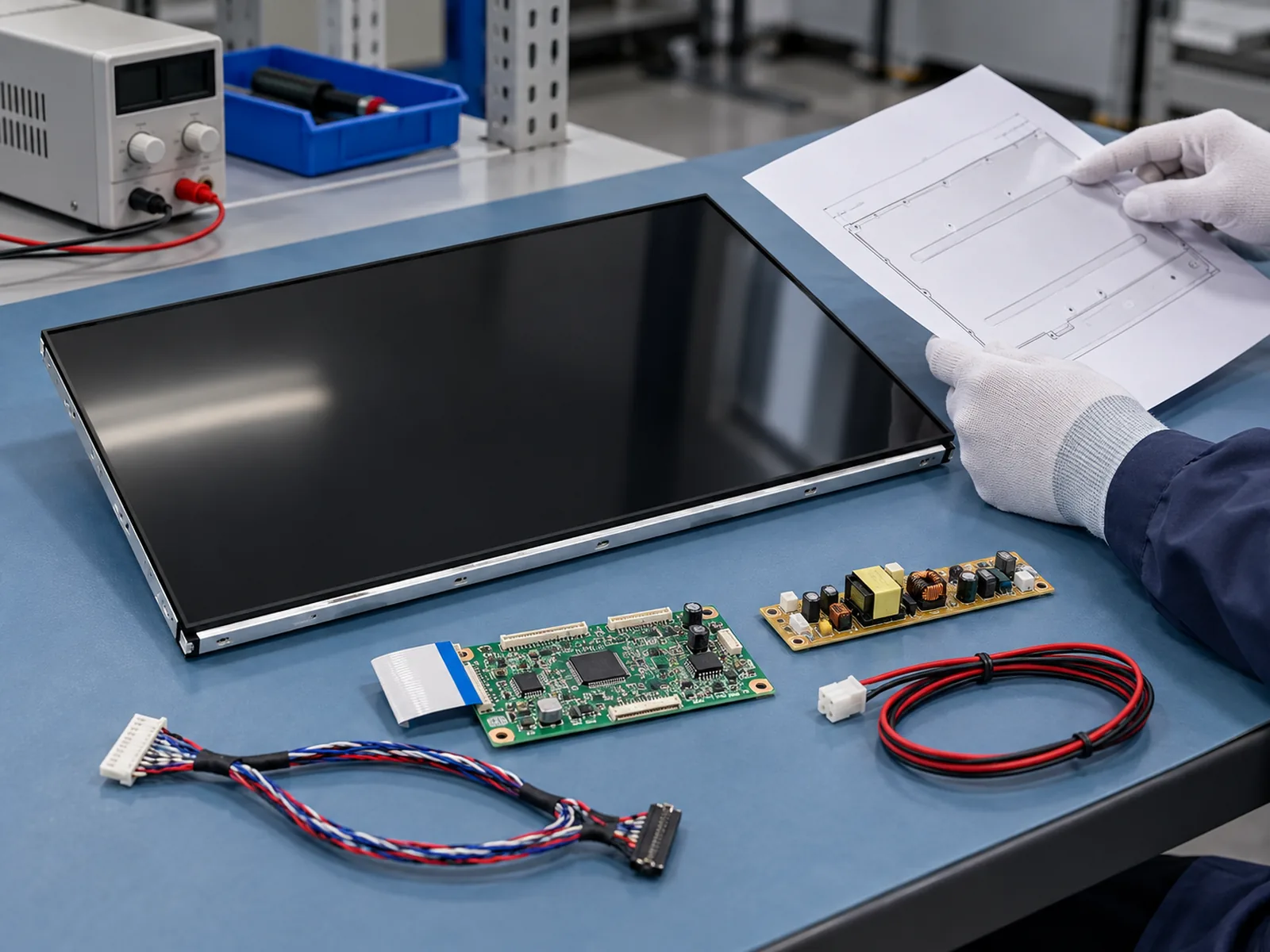
Claim: M215HCA-L3B purchasing needs an assembly power budget tied to the equipment's actual supply.
Which Electrical Loads Must the Equipment Supply Support?
How Does Panel Power Differ from Assembly Input Power?
The available Innolux C1 approval specification, Ver.3.0 with page footers dated 5 May 2017, separates these maximum reference values:
| Specified load | C1 reference | Budget boundary |
|---|---|---|
| LCD electronics | 4.05 W maximum | Power delivered to the LCD electronics. |
| LED lightbar | 11.88 W maximum | Backlight load at the driver's output. |
| Combined component load | 15.93 W maximum | Sum of the two specified loads. |
XIANHENG's webpage lists 14 W maximum. Confirm the applicable document and rating conditions for the offered revision before selecting a budget; these references are not interchangeable.
Illustrative calculation: assuming 90% LED-driver efficiency, an 11.88 W backlight load requires 13.20 W at the driver input. Adding 4.05 W gives 17.25 W before LCD-supply conversion losses, the video controller, and touch electronics. This simplified estimate is not an adapter rating.
Claim: Budget each load at its defined electrical boundary, including the losses between that boundary and the equipment supply.
What Must the External LED Driver Match?
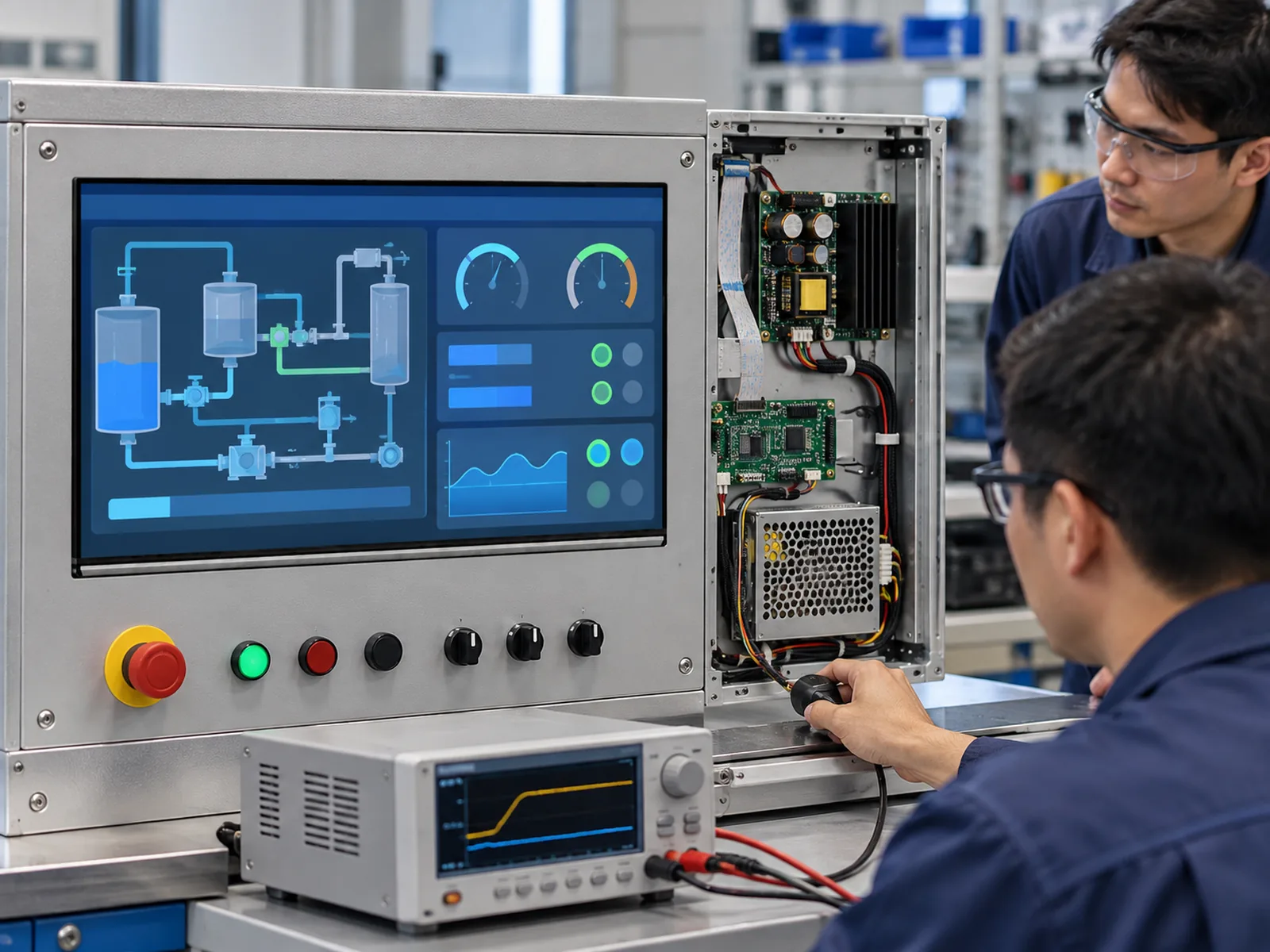
The C1 lightbar table gives 44.20–59.4 V per input pin at 50 mA and 100% duty. These are backlight operating references; the LCD electronics use a separate nominal 5 V supply.
Require a driver proposal identifying regulated current, supported lightbar connections, output-voltage capability, and regulation headroom. Check these across the agreed supply and temperature range. A controller advertised for 21.5-inch FHD panels does not establish backlight compatibility.
Specify the available equipment rail and tolerance, connector drawing, enable logic, and dimming interface. If one board provides video conversion and LED driving, obtain separate requirements for both functions.
Claim: Driver selection must match the confirmed lightbar load and available input supply together.
Which Operating Tests Should Release the Purchase?
How Should Startup and Dimming Be Checked?
Use the intended supply and production-length power leads. Capture input current and relevant rail voltages during power-up and backlight enable, following the applicable sequencing requirements. Average running watts cannot establish that the supply will start the assembly without entering current limit.
Where the display shares a rail with other equipment loads, test the agreed simultaneous-start condition. Record voltage dips, unintended resets, delayed illumination, and recovery behavior. Resolve failures with the actual supply, wiring, and driver configuration before release.
Exercise the required brightness settings, including the lowest usable level. Check visible instability, brightness jumps, and audible noise; assess camera banding if equipment cameras observe the display. Define the driver's control settings and measured luminance rather than assuming a percentage setting specifies brightness.
Claim: Startup and dimming acceptance must demonstrate the required behavior on the production power arrangement.
Which Measurements Belong in the Approval Record?
Measure steady input power with defined image patterns and backlight settings after stabilization in the intended enclosure. Record the supply voltage, ambient conditions, panel and driver temperatures, and operating duration. Judge each component against its applicable limits.
Compare results with the equipment's remaining supply capacity, startup capability, and thermal design. If the assembly exceeds the budget, evaluate a more efficient driver, a revised brightness requirement, or another supply arrangement. Retest the resulting configuration.
Retain the panel revision, driver and controller identifiers, current setting, harness drawings, firmware, and measurement results. Review substitutions against these records so a later driver change does not silently alter power or dimming behavior.
Claim: Purchase approval should identify a reproducible assembly with measured power and temperature results.
What Advantages Does XIANHENG Offer for M215HCA-L3B Power Integration?
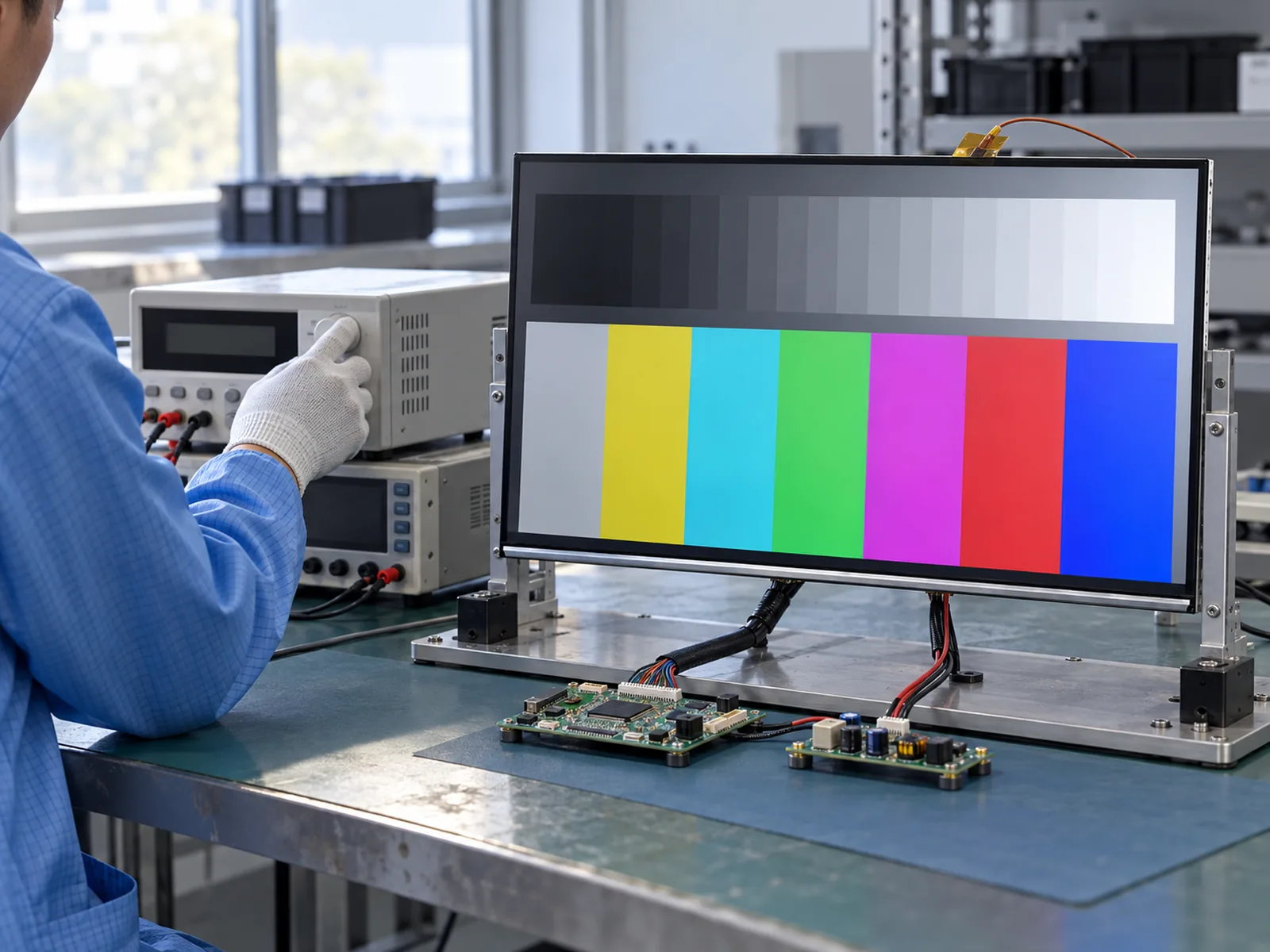
XIANHENG can review the Innolux M215HCA-L3B 21.5 Inch FHD AAS LCD Panel with available supply capacity, host details, and brightness targets, then propose controller, external LED-driver, and cable requirements for sampling.
The bare LCD excludes touch. Custom PCAP, cover glass, and bonding can be assessed separately. Standard reference luminance is 250 cd/m². Selected models may be evaluated for 500–1000 cd/m² customization or higher project targets; M215HCA-L3B feasibility requires confirmation. Any revised backlight needs a new power and thermal assessment. Brightness customization does not establish wide-temperature suitability.
Send the supply specification, installation conditions, touch requirements, and quantities. Browse the Industrial LCD Product Collection or reach out to XIANHENG to define the sample configuration for OEM validation.
Claim: XIANHENG can help coordinate the proposed display assembly around a documented OEM power requirement.


