
Oil and gas display solutions rarely consist of an LCD panel in isolation. Equipment manufacturers need a display subsystem that fits the enclosure, connects to the host, presents the production HMI correctly, supports the intended touch method, survives the defined operating conditions, and remains controllable through production and field service.
XIANHENG oil and gas display support can begin with a new equipment requirement, an existing host board, a selected LCD, a mechanical drawing, or an obsolete display that must be replaced. The practical objective is to coordinate the display-side components early enough that mechanical, electrical, optical, software, procurement, and lifecycle decisions do not conflict later.
Quick Answer: XIANHENG can support oil and gas display solutions by reviewing requirements, comparing industrial TFT LCDs, coordinating projected capacitive or resistive touch, customizing cover glass, arranging optical or tape bonding, selecting controller boards, preparing firmware and cables, building samples, supporting replacement analysis, and maintaining controlled production configurations. Projects may serve drilling controls, pump and compressor packages, metering skids, pipeline stations, analyzers, refinery machinery, loading systems, offshore equipment, and remote HMIs. Final equipment design, hazardous-area conformity, functional safety, environmental protection, and regulatory approval remain with the responsible manufacturer and certification parties.
Claim: Effective supplier support connects the panel, touch, glass, bonding, controller, firmware, cables, mechanics, samples, production controls, and lifecycle plan to one documented equipment requirement.
1. Which Oil and Gas Display Projects Can XIANHENG Support?
Direct answer: XIANHENG can support oil and gas display solutions using embedded LCD modules, touch-display assemblies, controller kits, open-frame displays, and customized monitor configurations for upstream, midstream, downstream, offshore, inspection, maintenance, and control-room applications. The appropriate scope depends on the host architecture, enclosure, operator, environment, quantity, and compliance plan.
How Can XIANHENG Support Drilling and Well-Service Equipment?
Drilling controls, cementing units, coil-tubing equipment, hydraulic power units, mud systems, and supporting machinery may require local displays for equipment state, pressure, load, speed, trends, alarms, permissives, and diagnostics. XIANHENG can compare panels against the available opening, viewing distance, HMI resolution, interface, temperature, vibration, and touch requirements.
Projects can include customized glass, glove-oriented touch, optical bonding, high-brightness options, controller boards, and restrained cable arrangements. The equipment manufacturer determines which information and commands belong on the HMI and keeps safety-related functions within the approved machine architecture.
How Can XIANHENG Support Pump and Compressor Packages?
Pump, compressor, separator, filtration, lubrication, and utility packages often combine a local HMI with PLC or industrial-computer control. The display may be used during commissioning, normal operation, alarm investigation, maintenance, and restart after an interruption.
XIANHENG can coordinate the LCD, touch system, front glass, controller, video cable, touch cable, and backlight requirements around the selected host. The completed package should be tested for its actual vibration, electrical noise, temperature, lighting, power disturbances, cable routing, and service conditions.
How Can XIANHENG Support Pipeline and Metering Stations?
Pipeline valve stations, metering skids, pump stations, and remote terminals may need local access to flow, pressure, valve position, batch data, communication status, alarms, and diagnostic information. Outdoor or semi-outdoor installations can add sunlight, seasonal temperature change, dust, moisture, and limited service access.
A project can review high-brightness panels, reflection control, touch through protective glass, wide-temperature candidates, cable direction, power, and long-term availability. The enclosure designer remains responsible for sealing, drainage, thermal control, cable entry, mounting strength, and the required installation method.
How Can XIANHENG Support Refinery and Terminal Equipment?
Refinery machinery, analyzers, dosing equipment, loading systems, storage terminals, inspection stations, and local process packages can expose the HMI to different combinations of indoor lighting, outdoor glare, cleaning agents, oil residue, electrical noise, heat, and restricted mounting space.
How Can XIANHENG Support Offshore and Marine-Adjacent Equipment?
Offshore displays may be affected by salt-laden air, high humidity, strong daylight, vibration, limited service access, and temperature change. These conditions affect more than the LCD: glass printing, coatings, bonding, metalwork, fasteners, connectors, cable shielding, gaskets, and enclosure materials can all influence performance.
Can XIANHENG Support Existing and Obsolete Display Replacement?
Replacement work can begin with the original LCD, touchscreen, controller, cables, drawings, datasheets, photographs, host details, software resolution, annual demand, and current problem. XIANHENG can compare candidates across active area, outline, mounting, interface, voltage, timing, backlight, touch, optics, environment, and lifecycle.
If a direct form-fit-function replacement is unavailable, the project can define a controlled redesign instead of hiding differences behind an adapter. Affected brackets, glass, cables, controller firmware, power, HMI scaling, touch mapping, testing, documentation, and certification evidence should be identified before release.
Claim: XIANHENG can support multiple oil and gas equipment categories, but every solution must be configured for the specific host, operator task, installation, environment, service strategy, and compliance boundary.
2. How Does XIANHENG Turn Equipment Requirements into a Display Solution?
Direct answer: XIANHENG reviews the customer’s application inputs, identifies mandatory and preferred requirements, compares suitable display architectures, documents exceptions, prepares drawings or samples, and supports iteration on the display-side configuration. The customer approves the requirement and validates the result in the completed equipment.
What Information Starts an Engineering Review?
Useful inputs include the equipment type, display location, operator tasks, viewing distance, available opening and depth, target size, native resolution, host model, interface, operating system, touch method, gloves, glass drawing, brightness, temperature, vibration, moisture, chemicals, EMC conditions, power, area classification, annual quantity, schedule, and service-life target.
Where some values are unknown, the project should label them as open requirements rather than turn assumptions into specifications. Photographs and a sample can support understanding, but controlled drawings, connector definitions, and datasheets are still needed before a production cable or assembly is approved.
How Are Candidate LCD Panels Compared?
XIANHENG can compare active area, outline, thickness, mounting features, resolution, aspect ratio, luminance, contrast, viewing angle, operating and storage temperature, interface, timing, voltage, current, connector, backlight, product status, and availability for supported candidate panels.
Minimum, typical, and maximum values should not be treated as equivalent. A candidate can be technically attractive yet unsuitable because its connector position conflicts with the enclosure, its native resolution does not match the HMI, or its lifecycle does not support the program.
How Is the Display Architecture Selected?
The project may use a native TFT LCD connected directly to an embedded host, an LCD with a separate controller board, an open-frame display, or a more complete monitor assembly. The choice determines who controls panel timing, firmware, EDID where applicable, backlight behavior, external inputs, buttons, power, and service replacement.
XIANHENG can review display-side options while the customer decides how the subsystem fits the equipment architecture. Broader selection considerations are introduced in Why Does Oil and Gas Equipment Need Industrial LCD Displays?.
How Are Interface and Startup Requirements Confirmed?
For a native connection, compare signal standard, resolution, timing, mapping, lane or channel count, color depth, logic voltage, connector, pinout, cable construction, power sequence, backlight enable, and dimming. For a monitor-style input, confirm the controller, firmware, supported source, scaling, detection, power, and recovery behavior.
A cable changes physical connections but cannot convert an incompatible signal by itself. When conversion is required, the selected bridge or controller must generate the panel’s exact output and be validated with the production host. Interface layers are reviewed in What Display Interfaces Are Used in Oil and Gas Equipment?.
How Are Optical and Touch Requirements Converted into a Build?
Ambient light, viewing direction, night use, font size, cover-glass reflections, surface treatment, air gap, bonding, touch electrodes, and backlight power determine what the operator actually sees. The selected stack should be tested as an assembly, because bare-panel brightness does not describe final readability.
Touch selection also requires the actual gloves, water or contamination conditions, target size, glass thickness, controller, firmware, grounding, and noise environment. XIANHENG can coordinate supported PCAP or resistive solutions, while the customer validates the final operator workflow and equipment behavior.
How Are Responsibilities Kept Clear?
XIANHENG can control agreed display-side drawings, parts, firmware, cables, samples, and inspection requirements. The equipment manufacturer controls the host, application software, power system, enclosure, grounding, cable routing, thermal design, risk assessment, safety functions, installation instructions, and system test plan.
For classified locations, the responsible manufacturer and certification parties determine the area requirements, protection concept, permitted components, fault conditions, temperature rise, cable entries, documentation, and change-assessment process. No bare LCD or touch assembly independently makes the completed HMI explosion-protected.
Claim: Requirement review is most effective when every display-side deliverable has a controlled input, measurable acceptance condition, responsible owner, and defined relationship to the completed equipment.
3. Which Display Components and Customizations Can XIANHENG Coordinate?
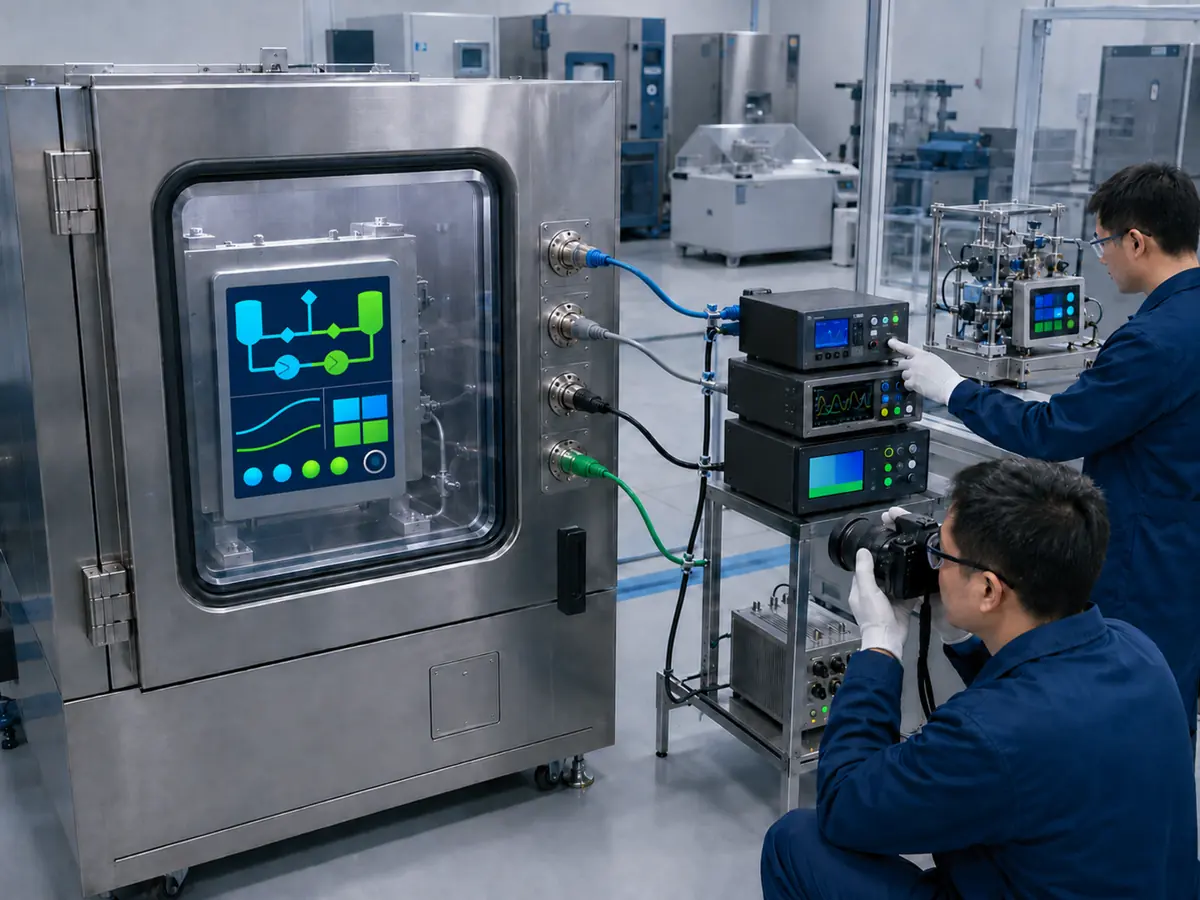
Customization should solve a documented integration or usability requirement. Adding parts without a defined purpose can increase tooling, inspection, replacement, and qualification work without improving the equipment.
Direct answer: Depending on the project, XIANHENG can coordinate industrial TFT LCD selection, PCAP or resistive touch, customized cover glass, printed borders, surface treatments, air or optical bonding, controller boards, firmware, video and touch cables, brackets, and open-frame configurations. Exact capability depends on size, construction, quantity, tooling, technical feasibility, and supplier availability.
Which Industrial TFT LCD Options Can Be Reviewed?
Candidate panels can be reviewed across compact and larger formats, traditional and widescreen aspect ratios, different resolutions, brightness levels, viewing technologies, temperature ranges, backlight designs, and native interfaces. The correct choice follows the HMI, host, mechanical envelope, thermal plan, environment, and lifecycle requirement.
Customers can review initial panel options in the Industrial LCD Product Collection. A listed product is a starting point; its current revision, availability, and suitability should be confirmed for the project.
Can XIANHENG Coordinate PCAP and Resistive Touch?
Projected capacitive touch can provide a durable glass surface, clear optics, and multi-touch capability. Its controller and firmware may need coordination for cover-glass thickness, gloves, edge response, water behavior, nearby metal, grounding, and electrical noise.
Resistive touch responds to pressure and can support gloves or a stylus, but its surface construction, optical behavior, activation force, sealing, and expected use must suit the equipment. The two technologies and their validation are discussed in How Do Touchscreens Improve Oil and Gas Equipment Operation?.
How Can Customized Cover Glass Support the Enclosure?
Cover glass can be defined by outline, thickness, viewing window, printed border, logo, color, holes, slots, corner radius, edge finish, touch area, adhesive region, and surface treatment. The drawing should align the LCD active area, enclosure opening, gasket, bracket, touch tail, and assembly tolerances.
Glass is one part of the front system. Impact behavior, sealing, pressure, chemical exposure, temperature, vandal resistance, and hazardous-area window requirements must be evaluated within the completed equipment rather than claimed from glass thickness alone.
When Can Optical Bonding Be Considered?
Optical bonding can reduce internal reflections, parallax, and the open air gap between display layers. It may improve perceived outdoor contrast and prevent contamination from entering the former gap. Tape or perimeter bonding may be adequate where these optical benefits are not required.
The bonding material, LCD, touch sensor, glass, thermal expansion, UV exposure, repair plan, process tolerance, and expected environment should be considered together. Bonding does not independently establish enclosure ingress protection or environmental certification.
Can XIANHENG Support Controller Boards and Firmware?
When the source provides HDMI, DisplayPort, DVI, or VGA, XIANHENG can review a controller solution that generates the selected LCD’s native signal. Supported input, resolution, scaling, image position, backlight control, power, buttons, connectors, EDID behavior where applicable, startup, and recovery should be defined.
Firmware is part of the approved configuration. A controller that displays one test image is not automatically ready for production. It must be checked with the actual computer, BIOS, graphics driver, operating system, application, power sequence, signal interruption, and restart behavior.
How Can Customized Cables and Mechanics Reduce Integration Work?
Controlled video, backlight, touch, USB, I²C, button, and power cables can define connector models, pin numbering, electrical connections, length, pair assignment, shielding, ground termination, cable direction, labels, bend limits, and retention. This reduces ambiguity between the host, controller, touch system, and LCD.
Brackets or open-frame structures can also coordinate mounting and service access. The customer should still validate cable signal integrity, strain relief, vibration, EMC, grounding, bracket stiffness, gasket compression, heat transfer, and installation clearances in the actual equipment.
Claim: Customization creates value when each glass, touch, bonding, controller, firmware, cable, or mechanical change removes a documented integration risk and remains reproducible under controlled drawings.
4. How Does XIANHENG Support Prototyping, Production, and Lifecycle Management?
A suitable design still needs a controlled path from engineering sample to repeat production. The sample configuration, test findings, approved changes, production inspection, and future notifications must refer to the same defined assembly.
Direct answer: XIANHENG can support drawings, configuration identification, engineering samples, display-side inspection, production coordination, change communication, replacement analysis, and supply planning. The customer validates the production-intent subsystem in the completed equipment and defines which changes require requalification or certification review.
What Should Be Controlled Before a Sample Is Built?
Confirm the LCD model and revision, touch sensor, controller and firmware, cover-glass drawing, printing, coatings, bonding method, controller board, firmware, cables, connectors, pinout, length, mechanical parts, and required settings. Open technical questions should be recorded rather than silently resolved through uncontrolled substitutions.
A sample label or build record should connect the physical assembly to these definitions. This makes it possible to understand whether a later result came from the intended design or from a different cable, firmware, touch tuning, or panel revision.
What Can Be Checked During Initial Sample Inspection?
Display-side inspection can include model verification, dimensions, active-area alignment, glass and printing, bonding appearance, cable construction, connector orientation, image function, backlight adjustment, touch coordinates, basic controller operation, and agreed cosmetic criteria.
These checks do not replace equipment qualification. The customer should test the sample with the production host, software, power, grounding, enclosure, mounting, cable route, HMI screens, gloves, lighting, environmental conditions, disturbances, and compliance plan.
How Can XIANHENG Support Engineering Iteration?
When a sample exposes a supported display-side issue, XIANHENG can review recorded symptoms, photographs, videos, measurements, logs, host details, and test conditions. Possible changes may involve the panel, controller firmware, touch tuning, cable, glass, bonding, bracket, or another agreed subsystem item.
The team should identify which earlier tests are affected by each change and repeat them on the revised production-intent build. Changing several items without configuration records makes cause-and-effect difficult to establish.
How Can Production Quality Be Kept Consistent?
Production controls can define approved part numbers and revisions, drawings, bills of material, workmanship criteria, incoming inspection, assembly checks, image and touch tests, brightness settings, cosmetic limits, packaging, labeling, traceability, nonconformance handling, and golden samples where appropriate.
The exact inspection scope should match the supplied assembly and customer agreement. Equipment-level EMC, sealing, functional safety, hazardous-area, software, environmental, and final acceptance tests remain outside a bare component inspection unless separately defined within the project.
How Are Product Changes and End-of-Life Risks Managed?
The project can define contact points, forecast expectations, product-change notification, end-of-life communication, last-time-buy review, inventory planning, and approved-alternative rules. No supplier can eliminate every market change, but earlier communication gives the equipment manufacturer more time to assess its options.
An alternative should be compared across form, fit, function, optics, interface, power, firmware, touch, environment, and availability. It should not enter production merely because the diagonal, resolution, or connector looks similar.
How Can Replacement Projects Be Controlled?
Replacement analysis can identify which original attributes must remain unchanged and which can be redesigned. A direct replacement target may include active area, outline, thickness, mounting, connector position, cable direction, resolution, timing, voltage, backlight behavior, touch interface, brightness, temperature, and startup behavior.
When differences remain, the responsible parties should document the modified parts, affected tests, firmware or software changes, service instructions, spare compatibility, and certification consequences. Controlled redesign is safer and more maintainable than presenting a partial match as interchangeable.
| Project Stage | Possible XIANHENG Support | Customer Approval Responsibility |
|---|---|---|
| Requirements | Panel and subsystem comparison | Equipment requirement and risk ownership |
| Engineering | Drawings, touch, glass, bonding, controller, and cables | Host, enclosure, power, software, and protection design |
| Prototype | Controlled sample and display-side review | Production-intent usability and system validation |
| Production | Agreed inspection, traceability, and configuration control | Final equipment acceptance and regulatory release |
| Lifecycle | Change communication and replacement comparison | Revalidation, certification review, and service authorization |
Claim: Prototype and production support is traceable only when samples, drawings, firmware, inspection criteria, test evidence, changes, and replacement decisions refer to a controlled configuration.
5. What Advantages Does XIANHENG Offer for Oil and Gas Display Projects?
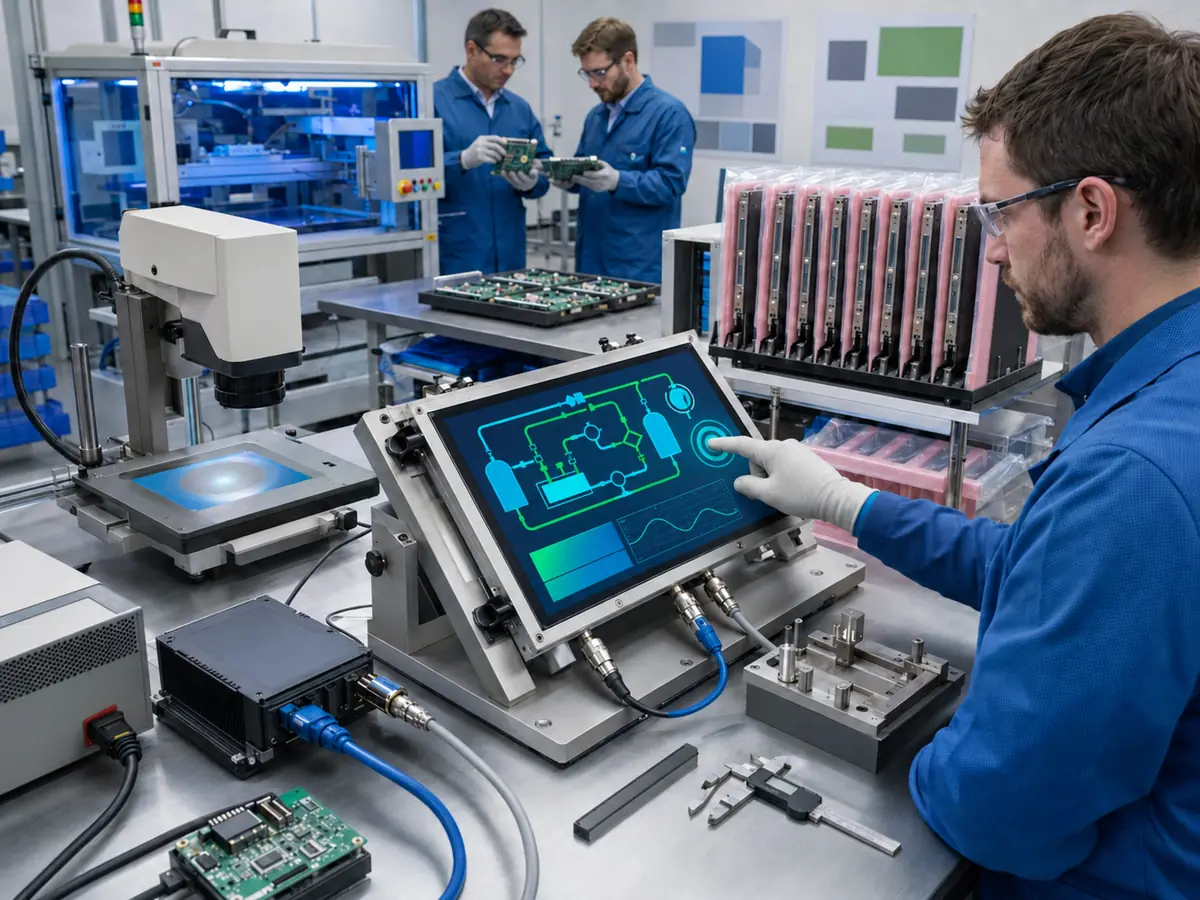
XIANHENG’s role is to reduce fragmentation within the display subsystem. Instead of treating the LCD, touch panel, cover glass, controller, firmware, cables, and bonding as unrelated purchases, the project can coordinate them around the equipment requirement and one controlled sample configuration.
Direct answer: XIANHENG offers focused industrial-display sourcing and integration support, flexible project scope, coordination across multiple display-side components, engineering samples, replacement analysis, and lifecycle planning. This can help equipment manufacturers identify incompatibilities earlier and maintain clearer configuration control from development through service.
Why Is One Coordinated Display Subsystem Useful?
Many integration failures occur at boundaries: the glass hides part of the active area, the touch tail conflicts with the bracket, the controller firmware scales incorrectly, or the cable pinout matches the connector but not the electrical definition. Coordinated review makes these interfaces visible before production.
The customer still approves each boundary in the completed equipment, but a single display-side configuration can reduce ambiguity between different vendors and simplify problem investigation when the physical sample is linked to its drawings and firmware.
How Does Engineering Communication Reduce Project Risk?
Useful communication includes exact model numbers, current revisions, marked drawings, pin tables, cable direction, firmware identifiers, sample records, photographs, measured symptoms, test conditions, and explicit open questions. These details are more actionable than general requests for a rugged or industrial screen.
XIANHENG can use this information to compare supported display options and explain known exceptions. The equipment manufacturer can then decide whether to adjust the requirement, change the architecture, test a candidate, or reject the option.
Can the Support Scope Match Different OEM Projects?
Some manufacturers need only an original industrial LCD with stable documentation. Others need a customized touchscreen and glass, a bonded assembly, a controller kit, cables, or an open-frame configuration. Replacement projects may require reverse comparison against an existing assembly.
A modular scope lets the project use only the support that its architecture requires. It also keeps responsibility visible: a supplied display assembly does not automatically include enclosure design, host software, equipment certification, site installation, or field-service authorization.
How Can XIANHENG Support a Long-Term Working Relationship?
A continuing project relationship can preserve approved drawings, configuration details, ordering history, technical decisions, and replacement context. Forecast communication and prompt review of proposed changes can help both parties respond before a supply issue becomes an emergency.
Long-term support should not be described as an unlimited availability guarantee. It is a managed process involving forecasts, product status, change notices, inventory decisions, alternatives, validation, and customer-controlled service planning.
What Should Customers Send to Begin a Project?
Send the equipment application, screen location, HMI screenshots, viewing distance, available opening and depth, preferred size, resolution, host and interface, touch method, gloves, glass drawing, brightness, temperature, vibration, moisture, dust, salt, chemicals, power, EMC conditions, area classification, certification responsibility, annual quantity, schedule, and lifecycle target.
For replacement work, also send the original LCD, touch, controller and cable models; datasheets; assembly photographs; symptoms; software resolution; firmware or BIOS information; current inventory; and a working sample when available. To discuss an oilfield HMI, drilling-control display, pipeline-station LCD, offshore touchscreen, controller solution, or obsolete-panel replacement, please reach out to XIANHENG.
Claim: XIANHENG’s principal advantage is coordinated display-subsystem support that helps manufacturers connect technical requirements, customized components, controlled samples, production evidence, and lifecycle decisions without obscuring final equipment responsibility.


